High School
Academics in High School
High School is a critical milestone in a young adult’s life. During these years, students discover their areas of strengths and weaknesses and decide the general direction for their future. After graduation, students will have to choose whether they intend to enter the work force, join the military, or continue to post-secondary education. For most students, high school is a time for preparation for entering college. Those with academic or athletic interests will focus their energy on earning scholarships.
Subjects required for high school include multiple courses in mathematics, science, social science, and English. Students may also be required to take varying amounts of computer science, physical education, health, fine arts, and foreign language. Some of these subjects come more easily to some students than to others, but a good high school program will ensure that every student who gives his or her best effort has the best opportunity possible to pass courses and exams required for graduation.
Social Life in High School
High School can also be a turbulent time in the personal lives of students. As teenagers begin to explore their new-found identities, they often test the limits of the boundaries set by parents, teachers, and other authority figures. Students also begin to develop a new understanding of friendships and relationships during these years, adding to the confusion as they try to figure out who they are and what they want to do with their lives.
A student’s social life often has a large impact on his or her high school experience. Teens who feel excluded from certain groups of friends or who have recently ended a relationship with a boyfriend or girlfriend may suffer academically because their attention is devoted to their personal problems. For some students, participating in extra-curricular activities such as sports or fine arts clubs with the school is extremely important. These activities, although time consuming, often form a major part of a high school student’s identity and therefore must be carefully considered when thinking about the high school experience.
Role of High School Teachers
High school teachers must recognize these many complex factors that shape the lives of the students who enter into their classrooms every day. These teachers face the unique challenge of both preparing students academically for the next phase of their lives and supporting them emotionally as they explore their developing identities. Although teachers’ primary tasks involve concentrating on the academic curriculum, they must also have an understanding of the personal nature of their work with students. Maintaining structure can be difficult in the midst of students who may be working through relationship crises, experimenting with drugs, or struggling with personal emotional problems. High school teachers need to provide a stable environment where students feel safe to learn the academic concepts needed for future success.
Teachers must also provide encouragement for students who struggle in their particular subject, recognizing that the student may not be interested in the material and may be frustrated with his or her seeming inability to learn the concepts. Teachers who present their material in a way that seems relevant and interesting to the students often have students who achieve greater success. Developing a relationship of trust with the students also contributes to a positive learning environment where even children who struggle academically feel comfortable asking questions and learning new material. Identifying students who are particularly skilled or interested in a certain subject is also important for teachers, as their encouragement often influences the field a student decides to pursue in college.
Requirements for High School Teachers
Individuals interesting in starting a teaching career through an alternative certification program must have hold a Bachelor’s degree and an overall GPA of 2.5 of higher. Depending on the certification chosen, specific credits from your undergraduate degree may be required. Once enrolled, teaching candidates will need to pass their designated content exam to be considered highly qualified under the No Child Left Behind guidelines.
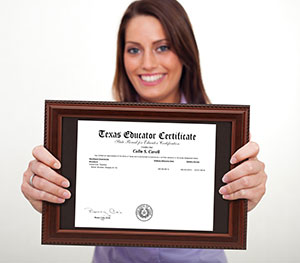
An attractive option for individuals interested in obtaining a teaching certification is the Web-Centric Alternative Certification Program (WCACP) . WCACP allows individuals to earn their Texas teaching certification online. Courses are conducted entirely online, so students can work at their own pace. Some students finish in one semester, while others take more time and work a full-time job while completing program requirements